Products
Product pages available in
EN - DE - FR - ES

Sustainability
Climate action progress
XCarb™ - towards net zero steel
Steel and the circular economy
Smart carbon technology
Clean power steelmaking
Circular carbon steelmaking
Capture and storage of fossil fuel carbon
Commitment to ResponsibleSteel™
Life cycle assessment
Recycling advanced steels
Our automotive outcomes

News, events and stories
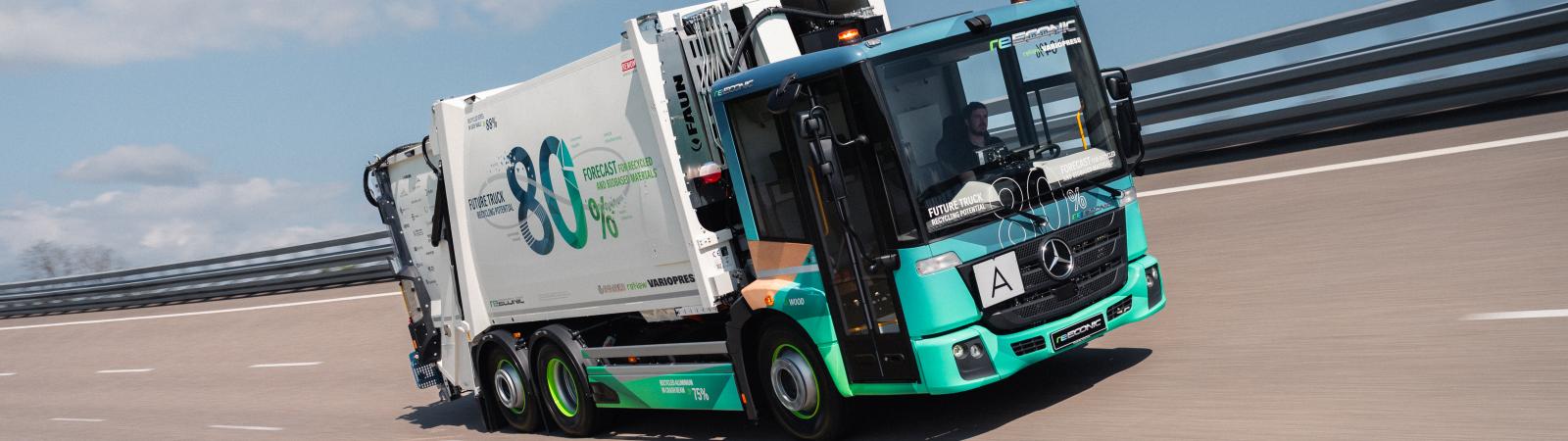
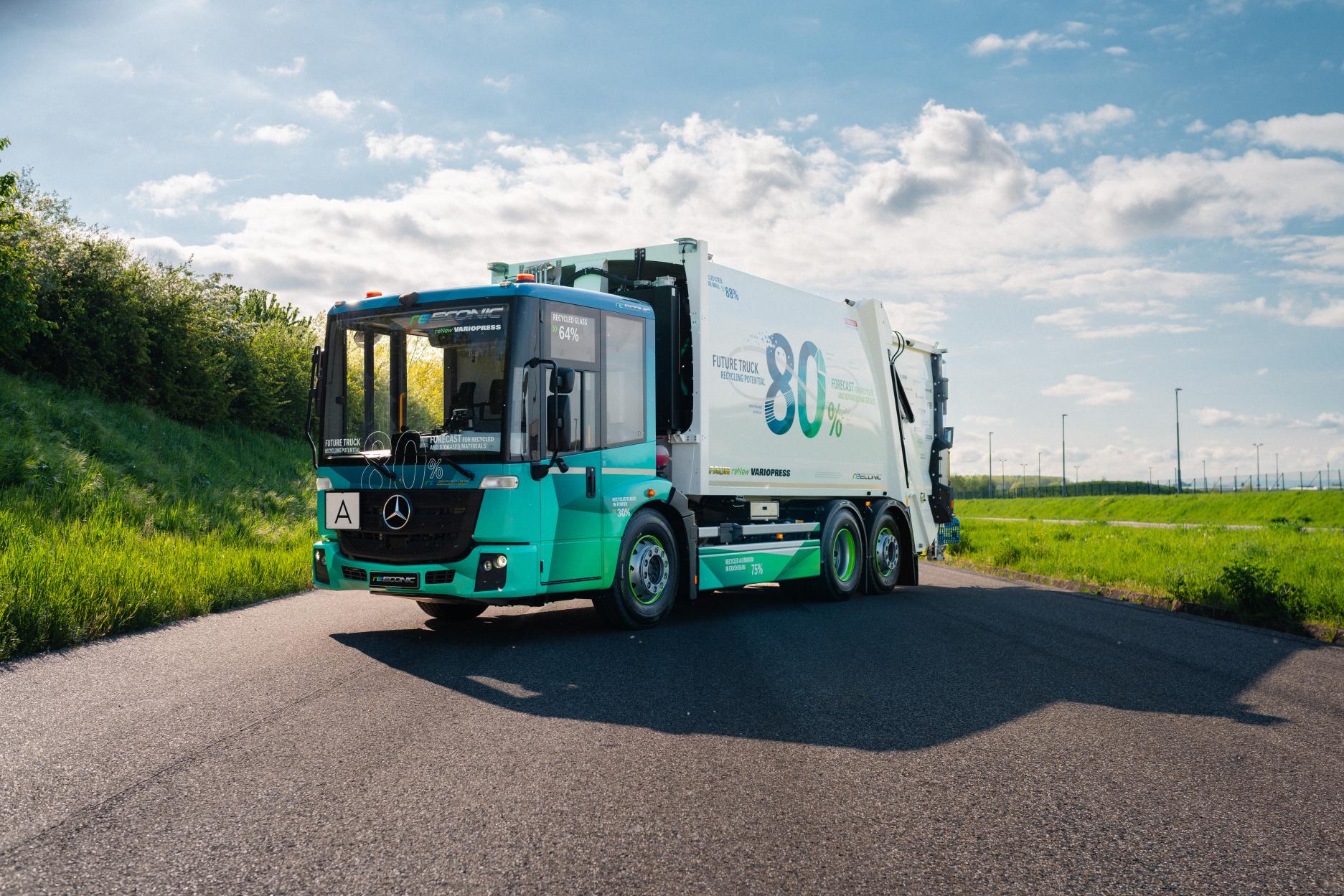
The transition towards low-carbon mobility is reshaping how commercial vehicles are designed and manufactured. The Mercedes‑Benz Trucks reECONIC project, initiated by Daimler Truck AG in collaboration with FAUN, brings together 33 partners across the automotive value chain and explores how circular-economy principles can be integrated into trucks by using materials with high recycled content and lower embedded CO₂.
ArcelorMittal contributes to this Daimler Truck’s reECONIC initiative by supplying XCarb® recycled and renewably produced steel grades for key structural components of the vehicle, including S500MC chassis rails and S355MC body components. The project highlights three important messages: advanced steel solutions can support circular vehicle manufacturing, XCarb® recycled and renewably produced steel is available today at industrial scale, and these low-emission materials can be integrated into existing manufacturing routes. This story explores how the reECONIC project illustrates the role of smarter steels in enabling circular, lower-CO₂ trucks.
“ArcelorMittal supplied XCarb® recycled and renewably produced steel for key structural components of the reECONIC concept vehicle. We are proud that our dedicated high circular-content offer supports Daimler Truck’s environmental ambitions and contribute to more sustainable mobility.”
Paul Brettnacher, CMO Automotive, ArcelorMittal Europe – Flat Products
About reECONIC – accelerating circular truck design
The reECONIC concept vehicle aims to demonstrate how circular economy principles can be applied in a demanding commercial vehicle environment. The project brings together 33 partners across the automotive value chain to explore how recycled materials, sustainable design and industrial production can work together in practice.
Circularity is at the heart of the concept. The reECONIC truck aims to maximise the use of recycled materials while targeting to meet the demanding requirements for performance, durability and safety expected in heavy-duty vehicles.
An accompanying TÜV-certified study indicates that up to 80 percent of key materials – including steel, aluminium, glass and plastics – could potentially be of circular origin, based on the components already implemented and additional projections.Overall, the combination of installed components and the study results show that, theoretically, around 80 percent of the materials steel, aluminum, glass, and plastic could be replaced with recycled materials and natural and bio-based materials.
Projects such as reECONIC help illustrate how the transition towards more sustainable mobility can be achieved not only through electrification, but also through responsible material sourcing and design.
Steel & circularity – why steel matters for low-CO₂ trucks
Materials play a central role in the decarbonisation of commercial vehicles. Trucks are expected to deliver long service life, structural integrity and reliability under demanding operating conditions. At the same time, manufacturers are under increasing pressure to reduce embedded carbon and improve resource efficiency.
Steel is uniquely positioned to support this transition. It is one of the few engineering materials that can be recycled again and again without losing its essential properties. Because of this, steel is already deeply embedded in mature industrial recycling loops.
For heavy-duty vehicles, this combination of strength, durability and recyclability is particularly valuable. Steel provides the structural performance required for demanding applications while supporting circular material flows at end of life.
This aligns closely with ArcelorMittal’s purpose of producing smarter steels for people and planet. By developing advanced steel grades and low carbon-emissions production pathways, ArcelorMittal works with customers across the mobility sector to support more circular and lower-carbon vehicle design.
XCarb® recycled and renewably produced steel – available today
To support customers in reducing embedded emissions, ArcelorMittal has developed the XCarb® recycled and renewably produced steel portfolio.
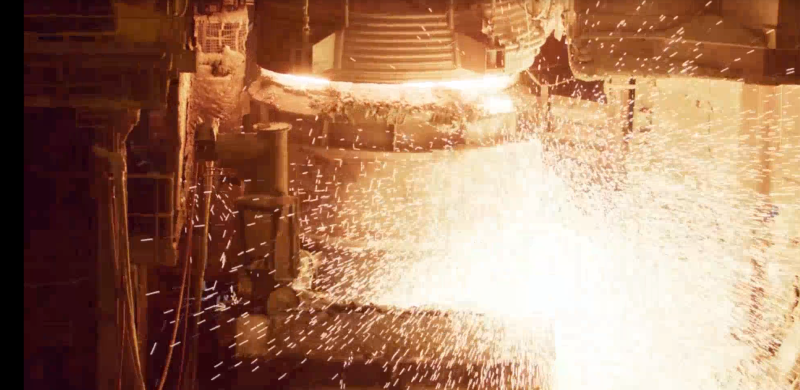
This offer combines high levels of recycled scrap with steel production powered by renewable electricity. A key example is ArcelorMittal’s electric arc furnace (EAF) facility in Sestao, Spain. Operational since 2022, the plant produces flat steel using scrap as the primary raw material and electricity sourced from renewable energy.
The facility has an annual production capacity of approximately 1.6 million tonnes and demonstrates that low-CO₂ steel production can already be achieved at industrial scale.
Grades within the XCarb® recycled and renewably produced portfolio are backed by a guaranteed minimum recycled content of at least 75 percent and production using 100 percent renewable electricity. Depending on grade and scrap availability, even higher recycled content levels may be achieved.
ArcelorMittal is also strengthening this pathway for the future. Planned investments such as the electric arc furnace project in Dunkirk represent a major next step in expanding low-CO₂ flat steel capacity in Europe.
ArcelorMittal’s contribution to the reECONIC project
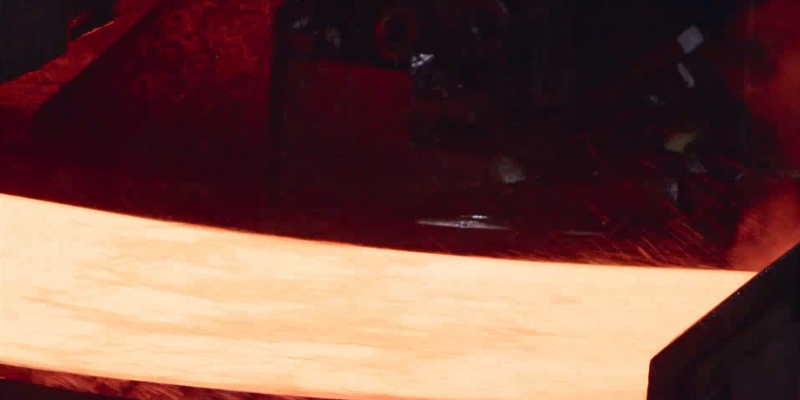
Within the reECONIC project, ArcelorMittal supplied XCarb® recycled and renewably produced steel for several key structural components of the vehicle.
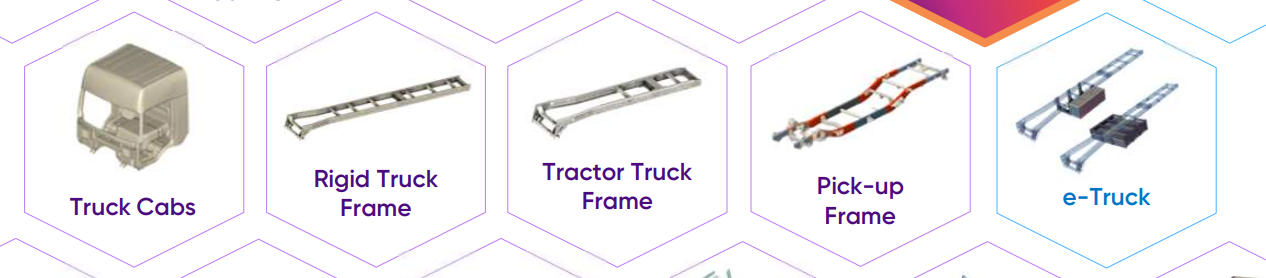
S500MC XCarb® steel was used for the truck’s chassis rails. These components were produced through stamping operations by Hörmann and Gestamp and form an essential part of the vehicle’s structural backbone. Chassis rails must meet demanding requirements in terms of strength, durability and reliability, making them a critical proof point for advanced steel solutions.
In addition, ArcelorMittal supplied S355MC XCarb® steel for body components, including parts of the waste container structure.
These applications demonstrate how recycled and renewably produced steel can be integrated into functional, safety-critical vehicle components. Equally important, they confirm compatibility with established manufacturing routes such as stamping and forming.
By working with partners across the value chain, the reECONIC project illustrates how circular materials can already be implemented within existing truck platforms.
Steel solutions compatible with today’s truck designs
One of the key insights from the reECONIC project is that progress towards more circular vehicles does not necessarily require entirely new manufacturing systems.
Advanced steel grades can be integrated into established engineering and production environments while delivering the required mechanical performance.
ArcelorMittal supports this approach through its S-in motion® program, which provides automotive manufacturers with engineering expertise and generic steel solutions for vehicle design. These concepts explore opportunities to improve structural performance, reduce weight and enhance sustainability across a wide range of applications, including chassis systems, truck bodies, cabins and battery housings.
Rather than offering ready-made designs, these solutions are intended to support customers with their engineering challenges and highlight opportunities for optimised steel structures. Through collaboration with vehicle manufacturers, these concepts can be adapted to meet specific design requirements and industrial constraints.
A blueprint for low-CO₂ trucks
The reECONIC project illustrates what is possible when circular design, industrial know-how and advanced low-emission materials come together. It shows that trucks with high levels of recycled material content could be developed using technologies that are already available today. Rather than being a laboratory experiment, the project illustrates a pathway that can be scaled through collaboration across the automotive ecosystem.
As policy makers and industry move towards ambitious climate targets, the role of materials in vehicle decarbonisation will become increasingly important. Circular design, responsible sourcing and lower-emission steel production all contribute to this transition.
Projects like reECONIC help demonstrate how these elements can work together in real-world vehicle applications.
Enabling the next generation of circular trucks
The reECONIC project provides a tangible example of how circular economy principles can be applied to commercial vehicle design.
Through the use of XCarb® recycled and renewably produced steel and advanced high-strength grades, ArcelorMittal contributes to a truck concept that combines performance, durability and circular material flows.
As the mobility sector continues its transition towards lower-CO₂ solutions, collaboration across the value chain will be essential. With its portfolio of advanced steels, engineering support and evolving low-carbon production routes, ArcelorMittal is ready to work with customers to support the next generation of circular and sustainable trucks.
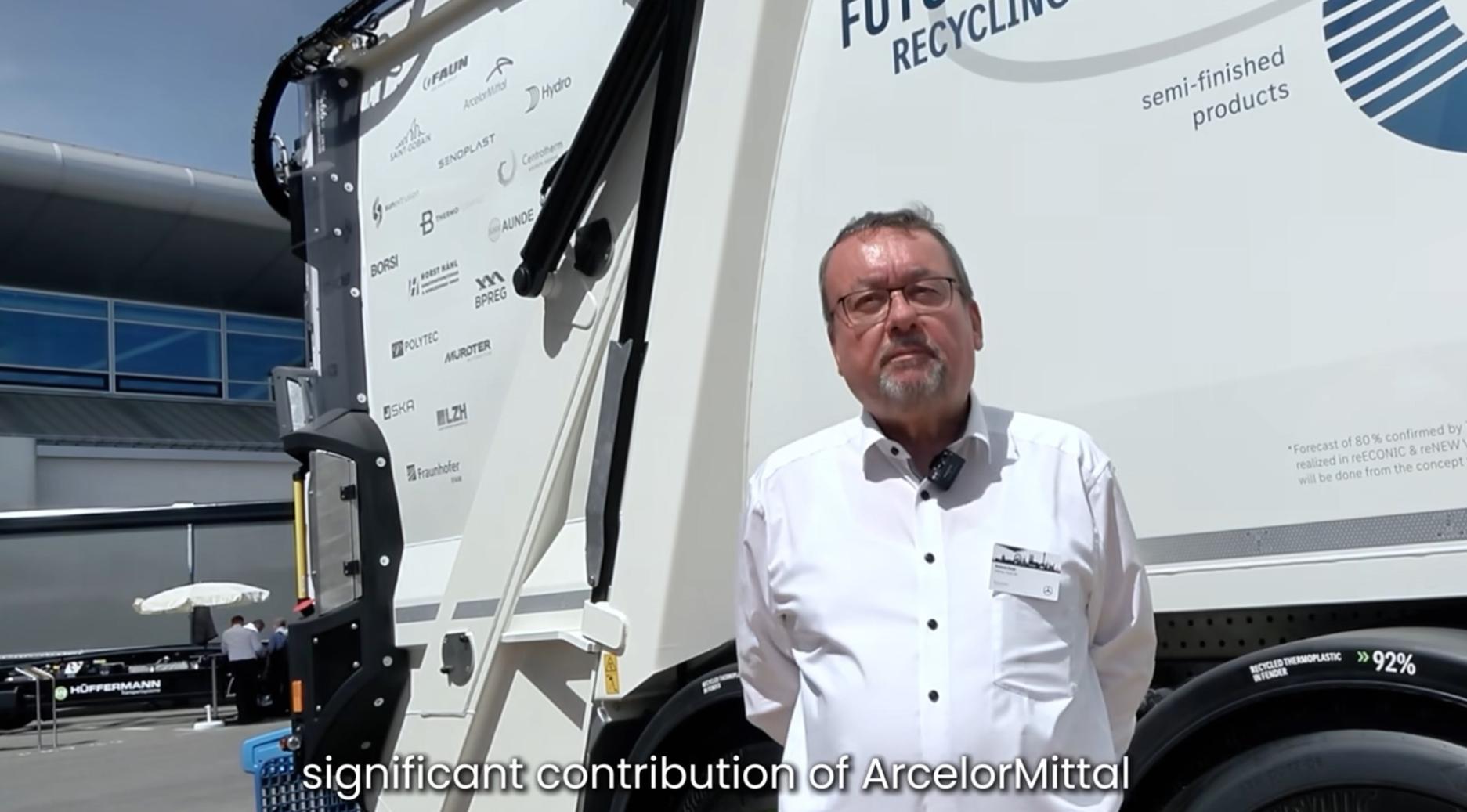
“ArcelorMittal Europe is a very important partner, we are quite happy and very grateful for their significant contribution in this project.”
Roland Dold, Senior Manager Advanced Engineering at Daimler Truck
You may also be interested in





 e-business

Who we are
Your co-engineering partner Your global steel solution providerOur purpose: Smarter steels for people and planetInteractive map
Innovation
The future of steelGlobal R&DInnovation in practiceFast Lane: ArcelorMittal’s sampling and pre-serial production serviceCustomer statementsLatest customer cases
S-in motion® solutions
3D car configuratorBattery electric vehicles Battery pack for BEVChassisFront chassis for EVsRear Chassis for BEVsPickup trucksMid-size Sedan and SUVC-segment vehicles Light commercial vehicles Commercial trucksFront seatsSustainability
Climate action progressXCarb™ - towards net zero steelSteel and the circular economy Smart carbon technologyClean power steelmakingCircular carbon steelmakingCapture and storage of fossil fuel carbonCommitment to ResponsibleSteel™ Life cycle assessmentRecycling advanced steelsOur automotive outcomesTailor your ArcelorMittal Automotive web experience
My ArcelorMittal Automotive space
This is your personal space on ArcelorMittal's global automotive website. You can keep your favorite ArcelorMittal automotive web pages and documents in a safe place
My spaceConfigure this website
If you want, you can tailor your web experience on this automotive website to your personal needs. By selecting your job profile and/or region (both optional) you enable us to personalize the content you see on this website.
No matter which job profile or region you select, you will always have unlimited access to all the information on this website. The only thing that changes is that you will be offered more tailored content. As well as your profile and region, we also use your browsing history on this website to remember your personal preferences and identify the most appropriate content for you.
We are confident that this will help you to find the inspiration you are looking for on the ArcelorMittal automotive website.